This page is a log of racing and training sessions and things learned during those sessions.
start with a good harness that is confortable both flat out and sitting
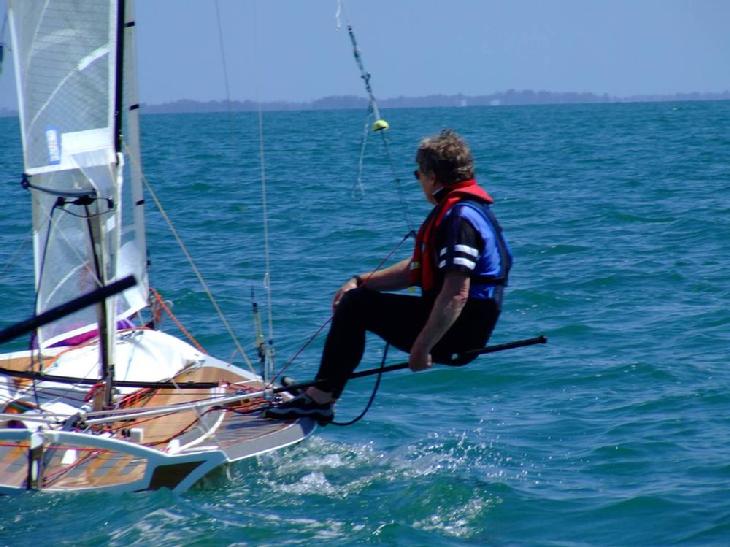
When the wind is up, trap low--sail flat
Proper rig adjustment on the Swift makes sailing a real pleasure. Never underestimate the value of the on-the -water adjustability of this rig. It is one of two primary features that allow us to carry such a large amount of sail area (the other is the auto sheeting feature of the main / jib system)
We've learned a lot through two boat testing over the past couple of months and we'll be sharing that information as it becomes consistantly duplicatable. With a fair amount of time spent going at it with Ron Watt, we've learned a few things that apply to your sails and boats. The following is some of what I think we've learned about the sails that should help you:
1. The luff and leech lines on your Banks kite should be completely untied, the boat sailed a couple of time in less than 10 knots, and then retied so the lines are just snug when fully stretched. Failure to do this will cause your kite to gradually get slower and slower--especially tight reaching. Amazing the difference once you make this correction.
2. In marginal trapping conditions (6 knots), this kite works best to soak down instead of going high (come in off the wire). In conditions 9 to 12 knots, stay out hard but try to soak down on every wave. Above 12, stay flat out and sail only for speed.
3. I've reduced my rake to the normal setting and the sails work better--especially the jib (I was carrying more rake than anyone else in Florida). I'm now able to put the jib sheet in the center hole of the clewboard and get all tell tales to fly right with an even slot. The boat is faster to weather than before.
4. In flat water and light air (5-8 knots) use more cunningham and less vang than you might think you should (10 on the loos gauge for the caps)
Bram
It is good to set up for the lulls in most conditions but when it’s really gusty, set up for the average wind.
If you have doubts about what the wind is going to do, set up for the upper range before the race starts. The price for swinging in and making adjustments while racing in a dying breeze is far less than in a building breeze.
No matter what, make the adjustments as soon as you know the rig is wrong. Sitting on the wing will reduce your speed to half for about 30 seconds while you adjust shrouds but not doing it will reduce your speed by 10% for 45 minutes or however long the race is. You do the math.